

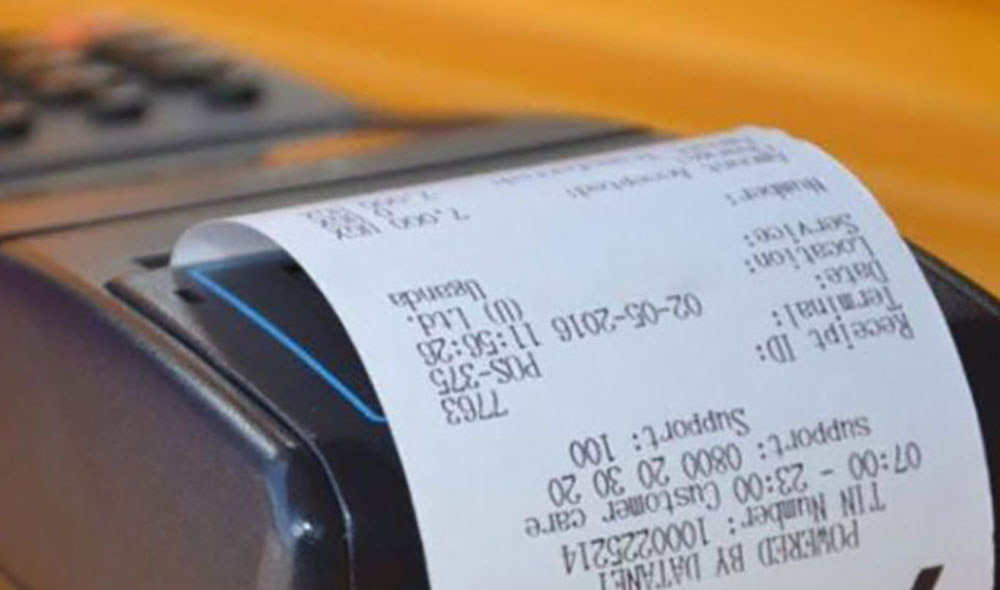
On Monday, 10 August, the Uganda Revenue Authority (URA) issued a public notice that widens the use of EFRIS. EFRIS stands for the Electronic Fiscal Receipting and Invoicing Solution. It is URA’s system for issuing invoices and receipts electronically, so that URA sees the sale at the time it happens.
Until now, most businesses treated EFRIS as a VAT matter. That has changed. The new notice covers businesses in 12 sectors of the economy, whether or not they are registered for VAT. If your business falls in one of those sectors, this affects how you bill your customers, how you record what you buy, and how much income tax you end up paying.
What URA has announced
There are four points to take from the notice.
- EFRIS now applies to businesses in 12 named sectors, regardless of VAT registration status.
- The requirements apply retrospectively from 1 July 2025. In plain terms, they reach back to cover a period that has already passed.
- A business expense will not be allowed as a deduction for income tax unless it is backed by an official e-invoice or e-receipt.
- For commercial transactions, the seller must capture who the buyer is on the fiscal receipt, using the buyer’s TIN, BRN or NIN.
Some background helps here. URA brought in EFRIS to improve tax administration, to stop the use of false receipts, and to get a clearer view of business transactions. It became mandatory for VAT-registered taxpayers from 1 January 2021, and URA has been steadily widening it since then. This notice is the biggest step in that widening so far.
The 12 sectors covered
- Manufacturing
- Mining and quarrying
- Water supply and waste management
- Electricity and gas
- Construction
- Transportation and storage
- Accommodation and food services
- Information and communication technology (ICT)
- Real estate
- Professional and technical services
- Arts and recreation
- Wholesale and retail fuel, meaning petrol, diesel and kerosene stations
Two groups are carved out of these sectors. Operators who carry passengers by road are excluded from the transport requirement. That covers boda-bodas, taxis, buses and shuttles. Non-resident providers of digital services who already pay Digital Service Tax are excluded from the ICT category.
Who is exempt
Small businesses are not caught by the new mandate. If your business is in one of the listed sectors but your annual turnover is below UGX 10 million, you are exempt. Turnover here means total sales for the year before you take off any costs.
Landlords and other taxpayers whose annual rental income is below UGX 2.82 million are also outside the requirement.
Being exempt does not shut the door. A business below the thresholds may still choose to use EFRIS voluntarily. Many find it useful, because customers who need a valid e-invoice for their own tax deduction will prefer to buy from a supplier who can issue one.
The part that hurts: expenses that are not allowed
This is the point we want every client to understand, because it hits the bank account.
Income tax is charged on your profit, not on your sales. You take your income, subtract your allowed business costs, and pay tax on what is left. When URA says an expense is disallowed, it means the cost stays in your books but is not subtracted when your tax is worked out. Your taxable profit goes up, so your tax bill goes up, even though you really did spend the money.
Under the new notice, a cost that is not supported by an official e-invoice or e-receipt may be disallowed.
A simple illustration (figures are made up to show the point)
Suppose a construction company has sales of UGX 100 million in a year and costs of UGX 70 million. Its profit is UGX 30 million, and tax is worked out on that UGX 30 million.
Now suppose UGX 15 million of those costs were paid to suppliers who gave only handwritten receipts, with no e-invoice. If URA disallows that UGX 15 million, the allowed costs drop to UGX 55 million. The profit for tax purposes becomes UGX 45 million instead of UGX 30 million. The company is taxed on an extra UGX 15 million of profit that it never actually kept.
How much extra tax that is depends on the rate that applies to your business and on your wider tax position. We can work that out with you. The general lesson holds either way: a missing e-invoice quietly turns a real cost into taxable profit.
What the 1 July 2025 date means for you
The notice was published in August, but it takes effect from 1 July 2025. That means transactions already sitting in your books for that period are in scope. It is worth going back through your purchase records from 1 July 2025 onwards and seeing how many of your larger costs are supported by an e-invoice or e-receipt and how many are not.
Where documents are missing, the practical step is to go back to the supplier and ask them to issue a proper fiscal document. How URA will treat older records in practice is something clients should confirm with URA, or raise with our team so we can take it up on your behalf.
Naming the buyer on every receipt
For commercial transactions, the receipt must now identify the buyer. The identifiers accepted are the TIN, which is the Taxpayer Identification Number, the BRN, which is the Business Registration Number issued at company registration, and the NIN, which is the National Identification Number on a national ID.
This changes the counter routine. Whoever issues receipts in your business now has to ask a business customer for one of those numbers and enter it before the document is issued. It also means you should be ready to give your own TIN or BRN when your staff buy from a supplier, otherwise the receipt you bring back may not do its job.
How EFRIS works in practice
When a sale is processed, the details go electronically to URA. The system then produces a Fiscal Document Number (FDN) and a QR code on the invoice or receipt. Those two things let anyone check that the document is genuine.
To get started, URA’s EFRIS page sets out what you need: an active TIN, your TIN password, an internet connection, and an email address or phone number so URA can send you a one time password. You log in on the URA web portal at ura.go.ug, choose first time registration, say whether you will use e-invoicing or electronic fiscal devices or both, list any extra business locations, and submit. Once URA approves the application, you can start issuing e-invoices and e-receipts.
URA supports more than one way of working. You can use the web portal, a desktop client application, or a direct system to system connection if you already run your own ERP or point of sale software and want it to talk to EFRIS automatically. The choice depends on how many transactions you handle and what systems you already have. For the current detail on each option, see ura.go.ug/en/efris or ask at your URA office.
What to do this week
- Check whether your business sits in one of the 12 sectors, and whether any of the exclusions apply to you.
- Check your annual turnover against the UGX 10 million threshold, and your rental income against the UGX 2.82 million threshold.
- If you are covered and not yet registered, register for EFRIS on the URA web portal. Confirm first that your TIN is active and that you can log in.
- Decide which channel suits you: the web portal, the desktop application, or integration with the system you already use.
- Pull your purchase records from 1 July 2025 to date and mark every cost that has no e-invoice or e-receipt behind it.
- Write to your main suppliers. Ask whether they issue EFRIS documents, and ask for replacements where you are short.
- Brief the staff who issue receipts. They must collect the buyer’s TIN, BRN or NIN on commercial sales.
- Make it a standing rule that no supplier invoice is paid without a valid fiscal document attached.
How our team can help
We are working with clients on three things at the moment: confirming whether the new mandate applies to a particular business, completing EFRIS registration and choosing the right channel, and reviewing purchases since 1 July 2025 to find the costs most at risk of being disallowed. We also train counter and accounts staff on issuing compliant documents, and we help set the internal rules that keep the paperwork right month after month.
If you would like us to look at your position, get in touch with your usual RKA contact and we will arrange a short review.
This article is general information about a public notice and is not advice on any particular business. Tax outcomes depend on the facts of each case. Please speak to our team, or to URA, before acting on anything set out here.